DGX10
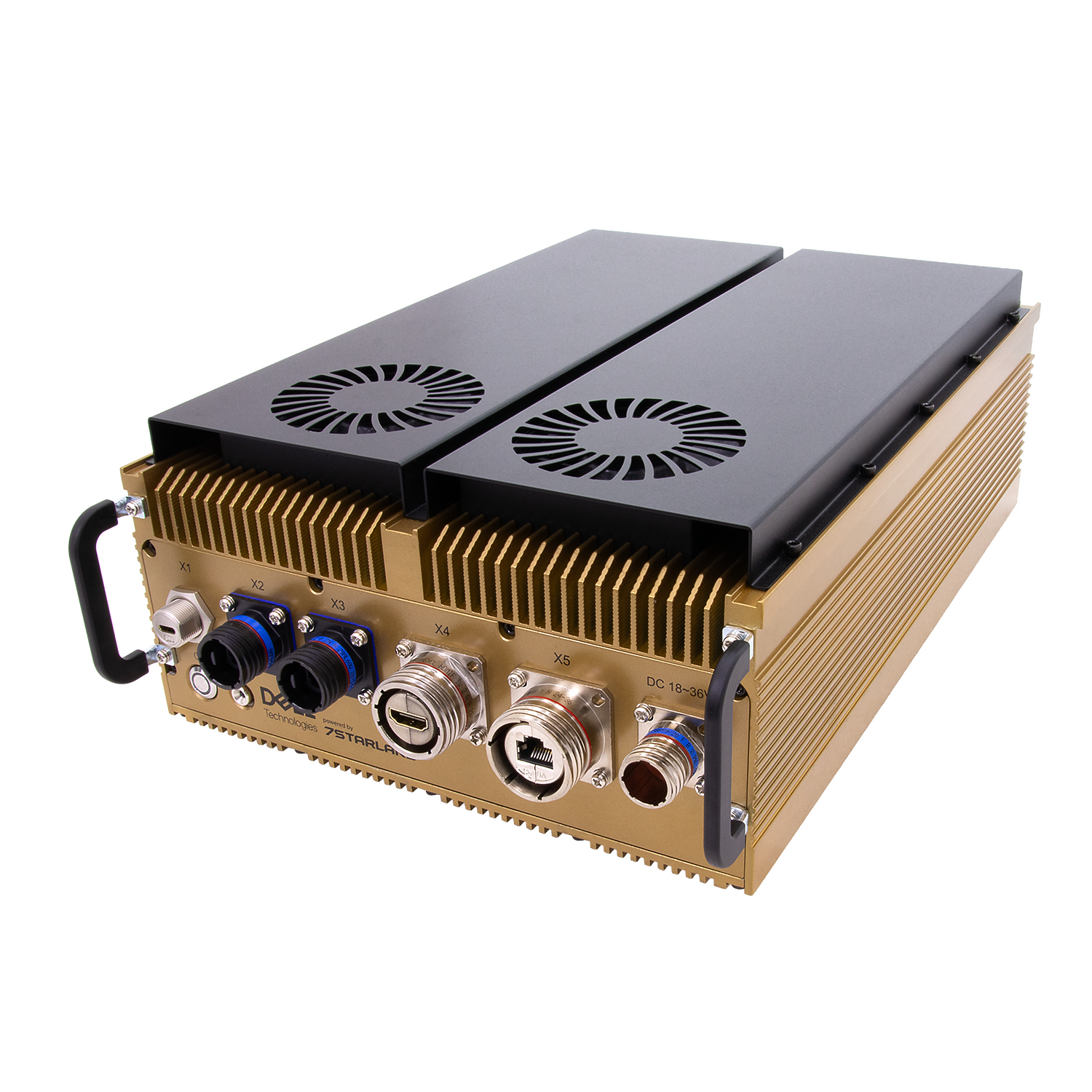
DGX10
NVIDIA DGX Spark™ GB10 Rugged Computer
- Powered by Dell Pro Max Architecture
- Built on NVIDIA GB10 Grace Blackwell Superchip
- Blackwell GPU with 5th Gen Tensor Cores
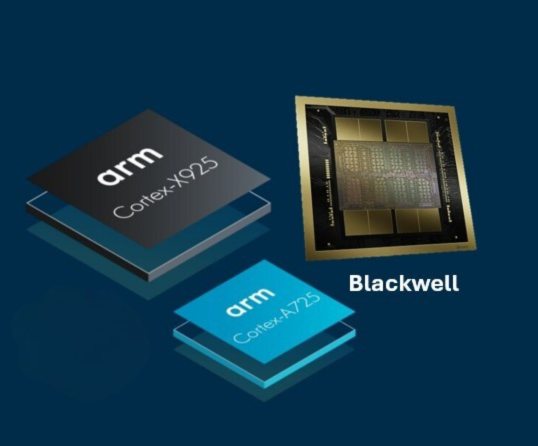
- 20-core Arm CPU (10 × Cortex-X925 + 10 × Cortex-A725)
- 1 PFLOP FP4 AI Performance (1,000 AI TOPS)
- 128G of Coherent, Unified System Memory
- Up to 4TB of NVMe Storage
- Dual 200Gbps ConnectX-7 SmartNIC
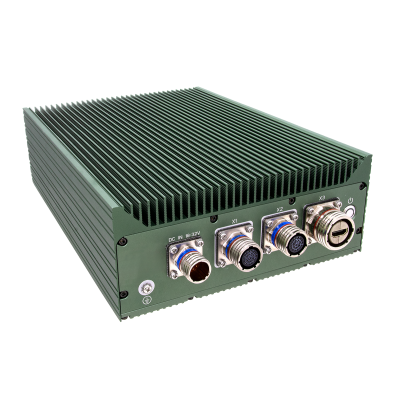
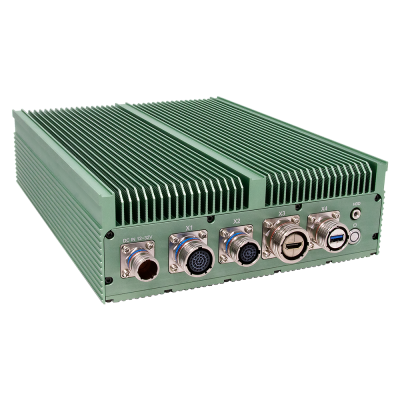
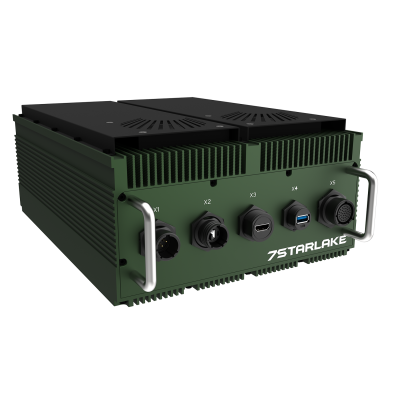
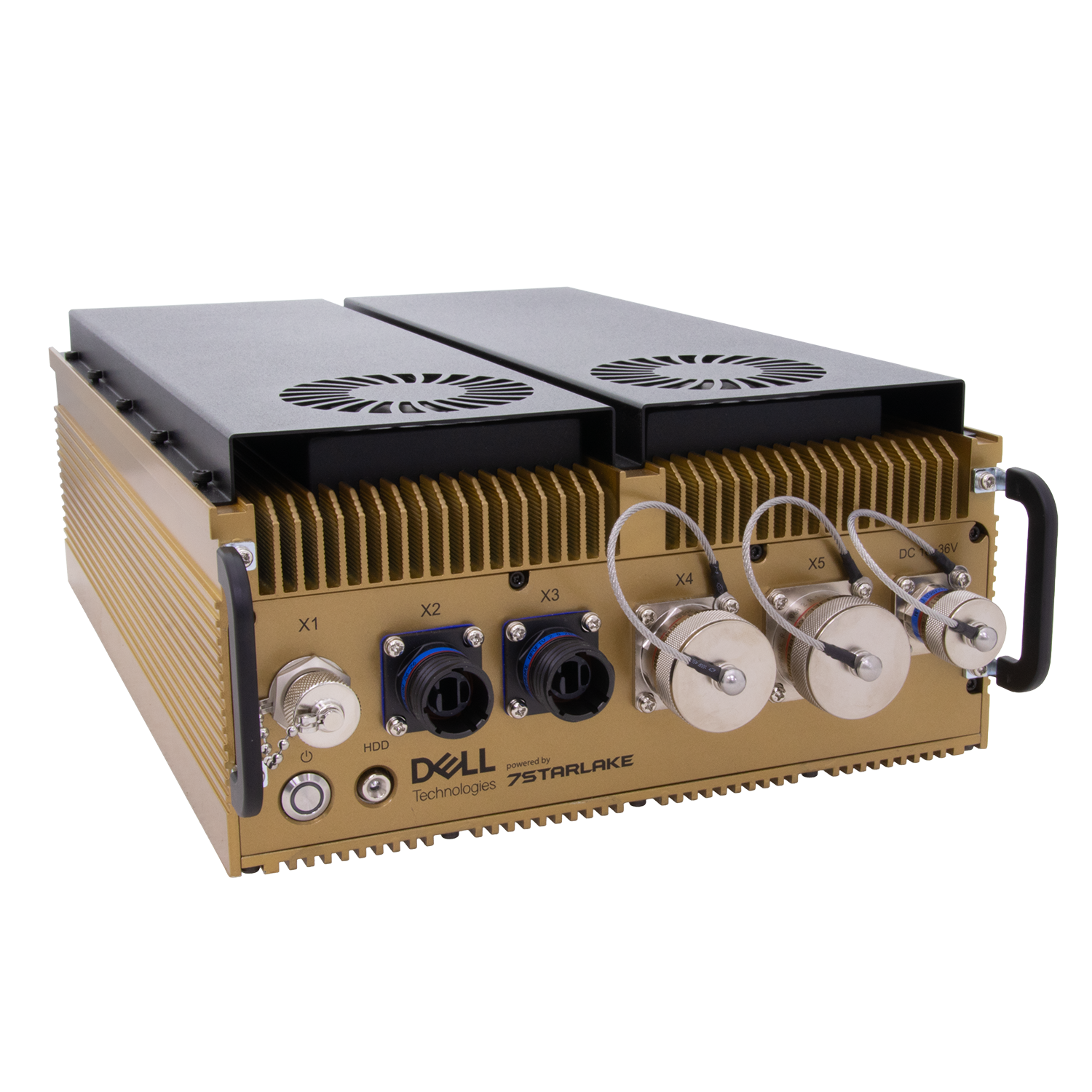
- MIL-STD-810 Standards with D38999 Connectors
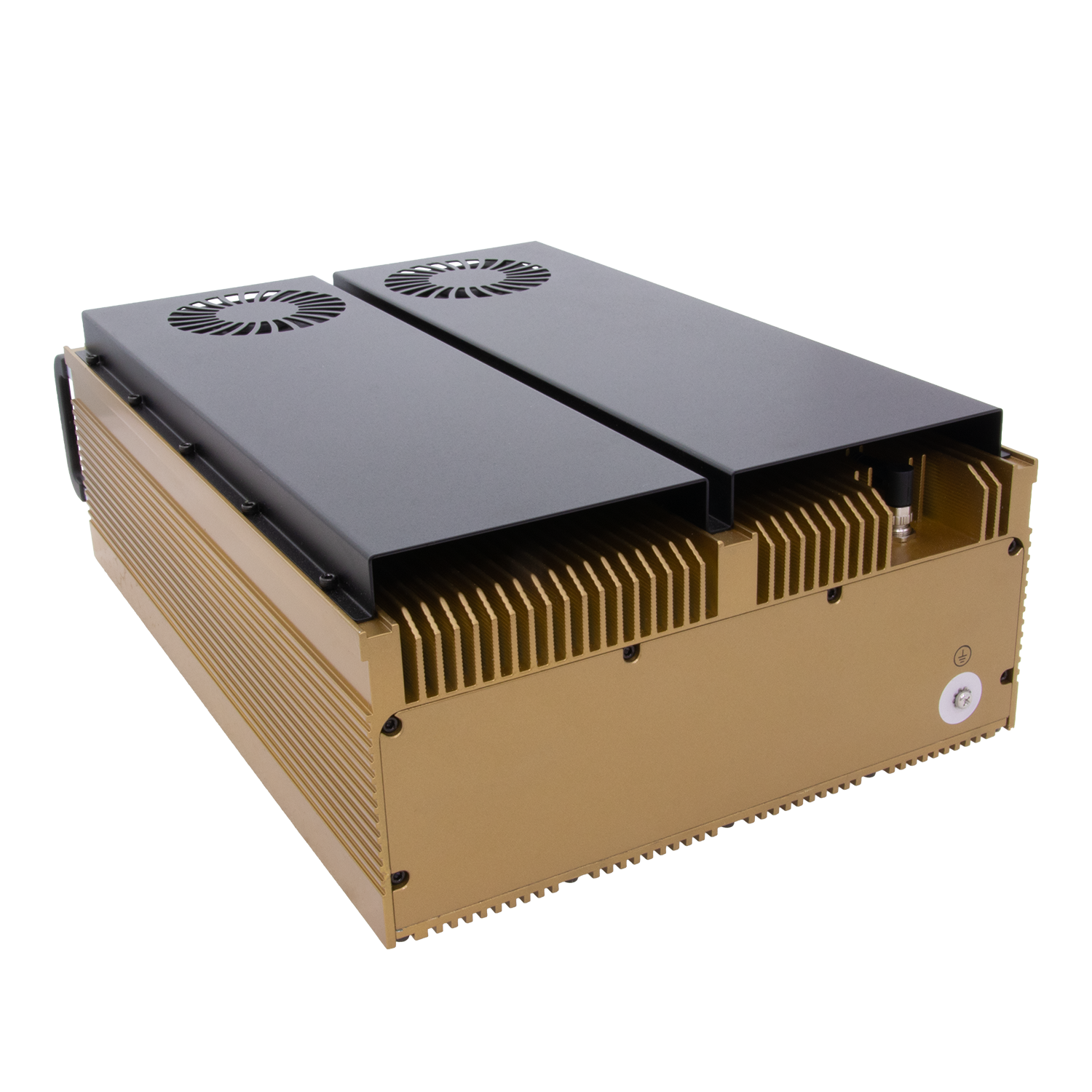
- Ruggedized Compact Small Form Factor

- Technical Profile
- Specifications
- Order Information
- Tactical Edge AI Inference Built on NVIDIA Grace Blackwell
-
Powered by Dell Pro Max with NVIDIA GB10 Grace Blackwell Superchip, the DGX10 is a ruggedized AI computing platform designed to meet the growing demands of large-scale generative AI and edge AI workloads. Optimized for a desktop form factor, it integrates a high-performance 20-core Arm CPU—featuring 10 Cortex-X925 and 10 Cortex-A725 cores—to accelerate data preprocessing, orchestration, model tuning, and real-time inference. Leveraging NVLink™-C2C, the Grace Blackwell Superchip delivers a unified CPU–GPU memory architecture with up to six times the bandwidth of PCIe Gen 5, enabling efficient handling of large datasets and complex AI models. Combined with the NVIDIA Blackwell GPU, featuring 5th-generation Tensor Cores and FP4 precision support, the DGX10 delivers up to 1 PFLOP FP4 AI Performance (1,000 AI TOPS) for demanding defense applications, including surveillance, target tracking, and real-time situational awareness.
- High-Capacity, Secure Storage and Networking
-
The DGX10 features 128 GB of coherent unified system memory and up to 4 TB of NVMe M.2 storage with built-in self-encryption, enabling secure, high-speed local data processing at the edge. This architecture supports mission-critical workloads that require low latency, data sovereignty, and operation in disconnected or denied environments. Integrated ConnectX-7 SmartNIC support delivers high-performance networking up to 400 Gbps, enabling rapid sensor data ingestion, distributed AI inference, and secure edge-to-cloud or edge-to-edge communications. These capabilities make DGX10 well suited for ISR data processing, autonomous systems control, tactical decision support, electronic warfare analytics, and forward-deployed AI inference where performance, security, and resilience are essential.
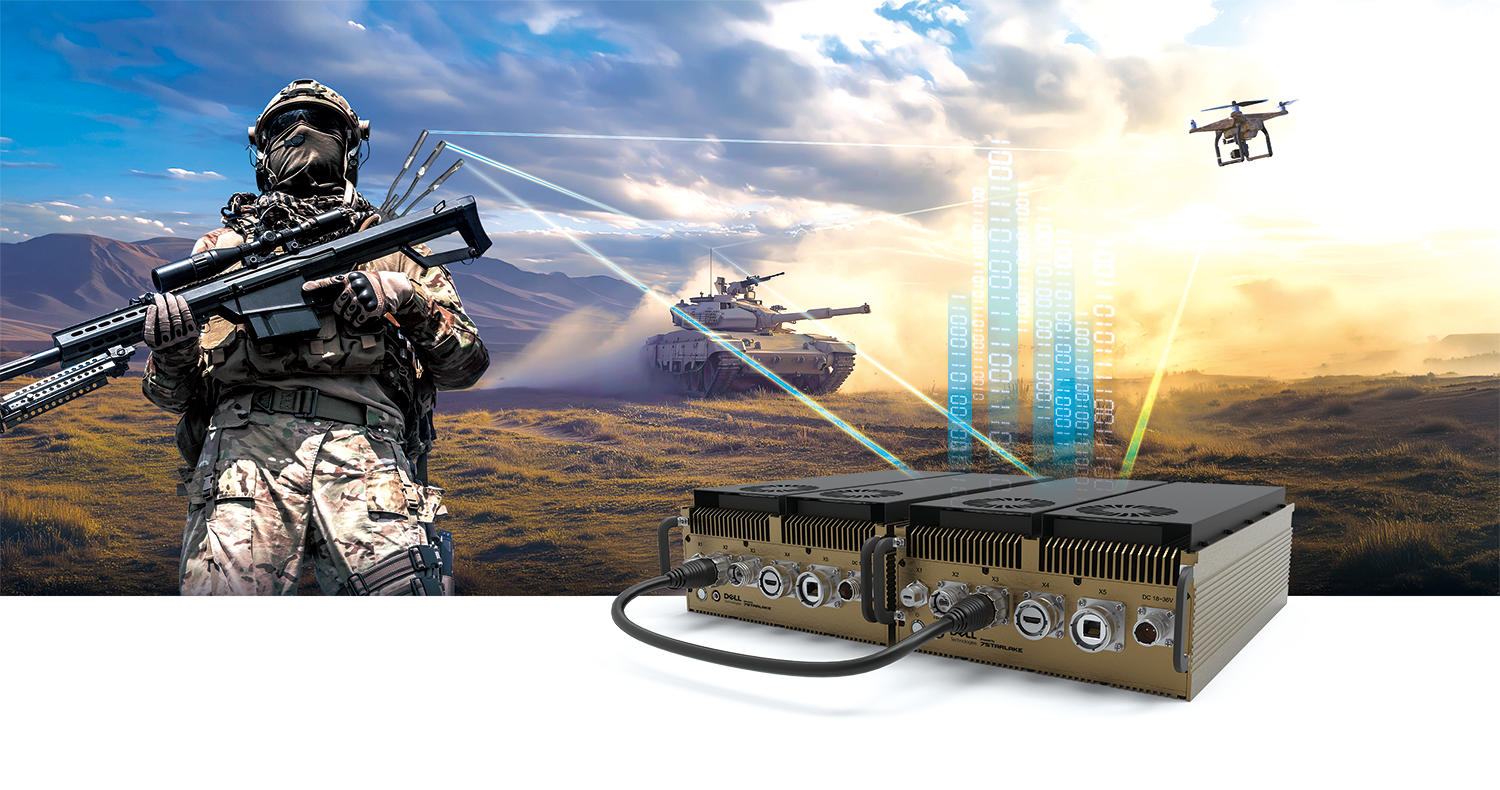
- Military Ruggedization with Robust D38999 Connectors
-
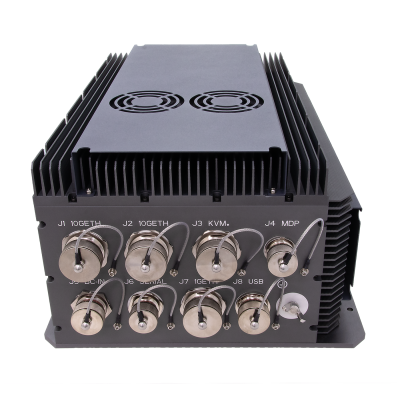
Designed to meet MIL-STD-810 requirements and stringent size, weight, and power (SWaP) constraints, the DGX10 is built for deployment in harsh operational environments. The system incorporates robust DTL-38999 military connectors and a sealed, compact chassis that protects internal electronics from sand, dust, humidity, and salt fog. Meeting the MIL-STD-461 EMI/EMC standards, the DGX10 passes extensive environmental testing, including shock and vibration, voltage spikes, electrostatic discharge, and extreme temperature exposure—making it a reliable edge AI inference platform for defense, aerospace, and industrial applications.


- Mission-Ready Multi-Node AI Clustering
-
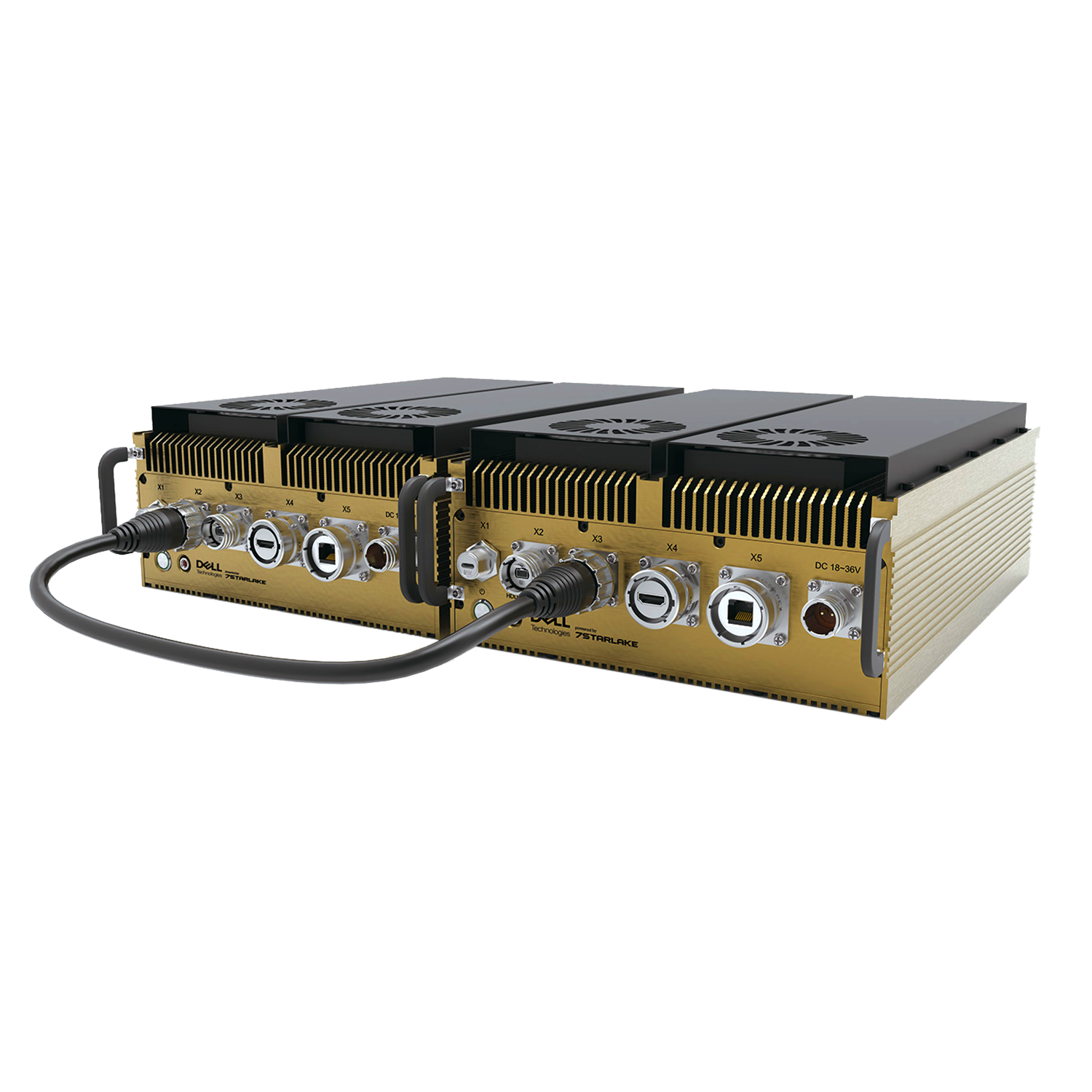
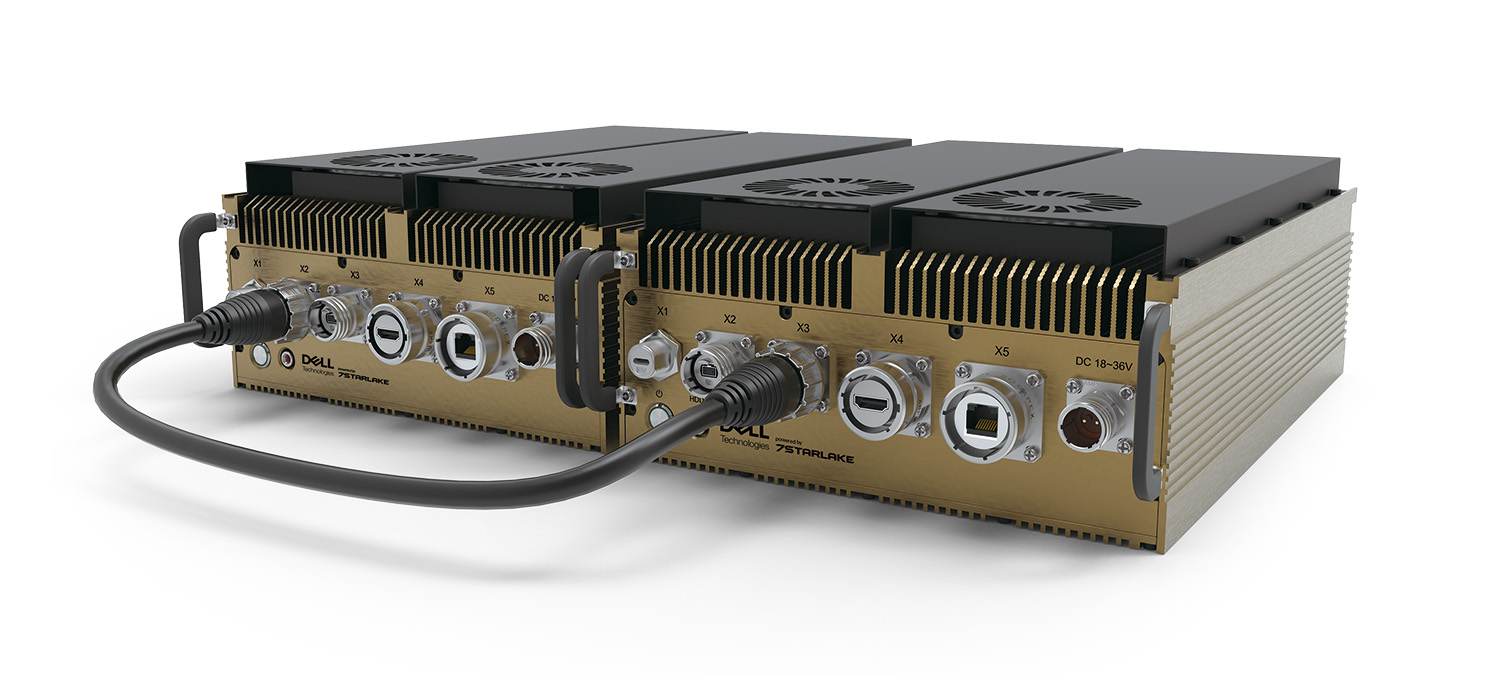
Multiple DGX10 systems equipped with NVIDIA® ConnectX-7 NICs can be directly interconnected using a rugged D38999 MPO 200Gbps cable to form a compact AI cluster. The cable features QSFP56 connectors on both ends, enabling direct connection to the NIC interfaces without requiring additional networking equipment. This plug-and-play architecture provides rapid deployment for point-to-point model testing, small-scale AI training, inference workloads, and validation environments.
For deployments requiring more than two DGX10 systems, greater scalability, or advanced network topologies, DGX10 nodes can be connected through a high-speed network switch. This architecture seamlessly scales to three or more nodes, creating a powerful desktop-class AI cluster. With high-bandwidth interconnects and centralized network management, the solution supports distributed model training across multiple systems while simplifying future expansion and cluster administration.
- Appearance
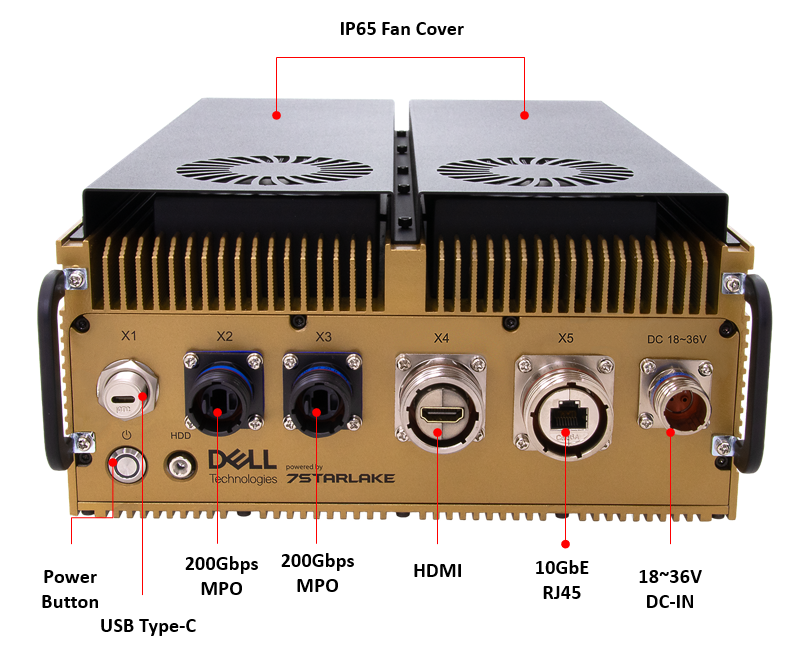
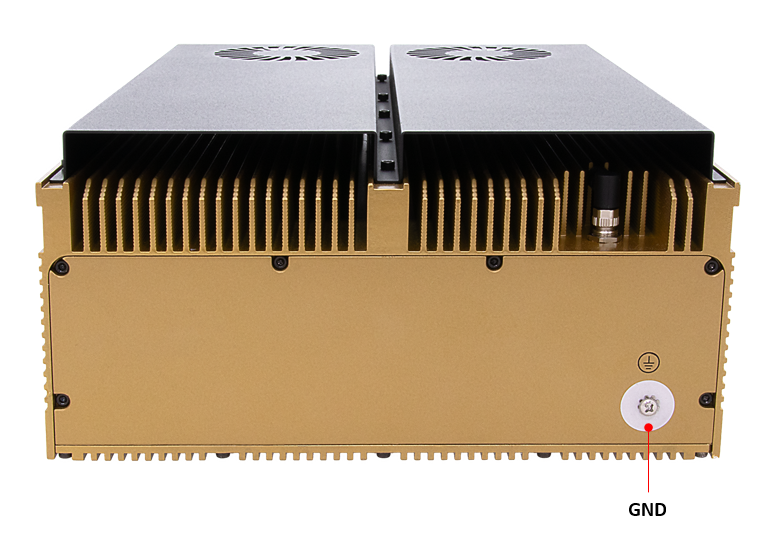
|
System |
|||
|---|---|---|---|
|
Processor |
20 core Arm (10 Cortex-X925 + 10 Cortex-A725 Arm) |
||
|
Memory Type |
128 GB LPDDR5X, unified system memory 256-bit 273 GB/s |
||
|
Architecture |
NVIDIA GB10 Grace Blackwell |
||
|
GPU |
|||
|
CUDA Cores |
NVIDIA Blackwell Architecture |
||
|
Tensor Cores |
5th Generation |
||
|
RT Cores |
4th Generation |
||
|
Tensor Performance |
1 PFLOP FP4 AI Performance (1,000 AI TOPS) |
||
|
NIC |
|||
|
Smart NIC |
Dual ConnectX-7 SmartNIC |
||
|
Ethernet Speeds |
10/25/40/50/100/200/400GbE |
||
|
Network |
Wi-Fi 7, Bluetooth 5.4 |
||
|
Storage |
|||
|
HDD/SSD |
Up to 4TB M.2 NVMe with Self-encryption |
||
|
Front I/O |
|||
|
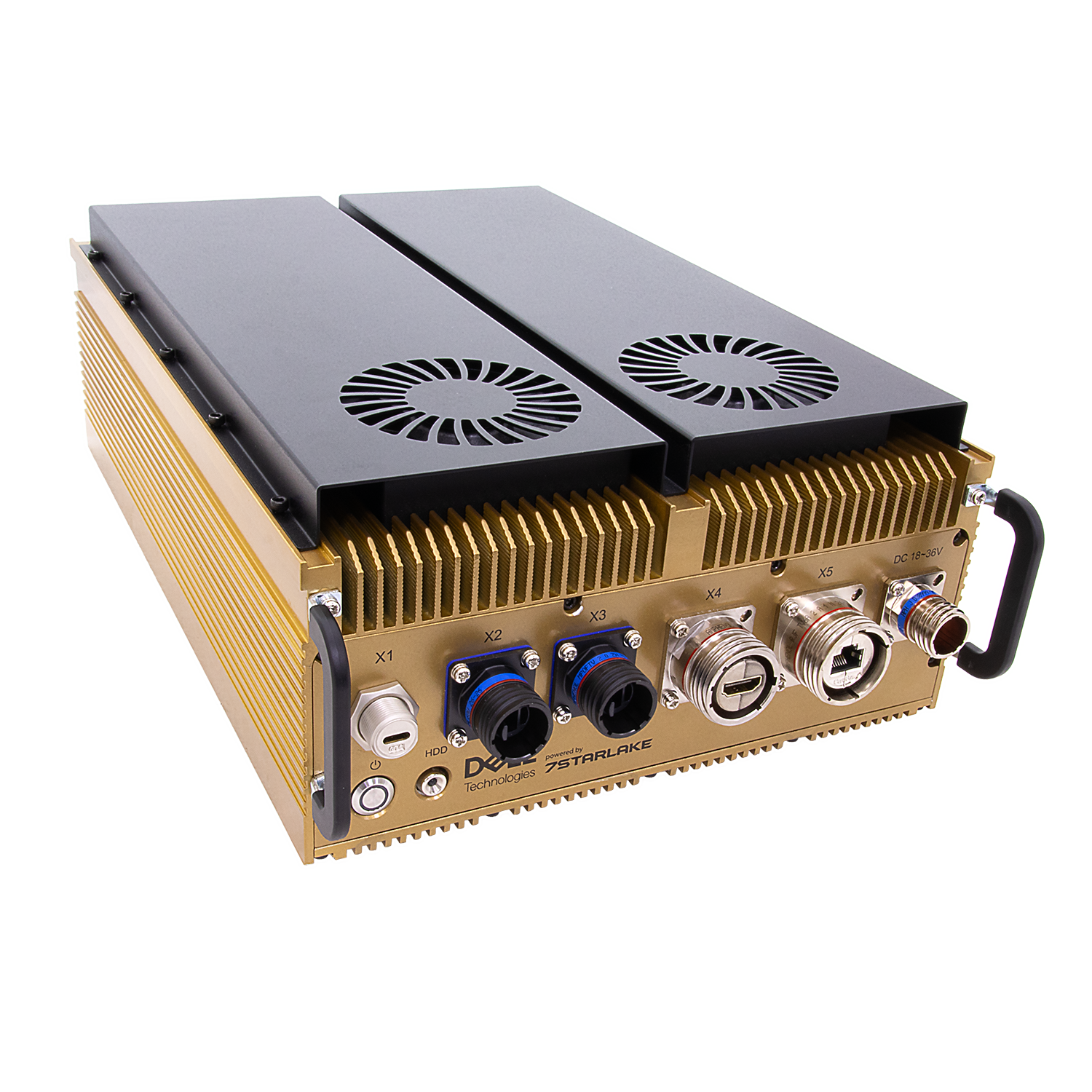
X1 (DC-IN) |
1 x Amphenol 24FC4PN (4PIN) |
||
|
X2 (HDMI) |
1x Amphenol HDMIFTV2AGF459 |
||
|
X3 (10GbE) |
1x Amphenol RJFTV6A7SA1N |
||
|
X4 (200GbE) |
1 x Amphenol FSI MPOFTV70ZNN |
||
|
X5 (200GbE) |
1 x Amphenol FSI MPOFTV70ZNN | ||
|
Power button |
1 with Power LEDs |
||
|
Power Requirement |
|||
|
Power Input |
18-36V DC-IN (Optional with MIL-STD-461 Filter) |
||
|
Operating System |
|||
|
Operating System |
NVIDIA DGX OS 7.3.1 |
||
|
NVIDIA GPU Driver |
580.95.05 |
||
|
NVIDIA CUDA Toolkit |
13.0.2 |
||
|
Physical |
|||
|
Dimensions |
250 x 250 x 138 mm ( H x W x D) |
||
|
Estimated Weight |
5 kg (11.02 lbs); Final Weights Dependent on Specific Configuration |
||
|
Chassis |
Aluminum Alloy, Corrosion Resistant |
||
|
Finish |
Anodic Aluminum Oxide |
||
|
Cooling |
Conduction Cooling with Air Force Smart Fan Ingress Protection |
||
|
Ingress Protection |
IP65 |
||
|
MIL-STD-810 Standards |
|||
|
High Temperature |
High Temperature Storage |
+74°C per MIL-STD-810G/501.5/I for 7 Cycles |
|
|
High Temperature |
High Temperature Operation |
+55°C per MIL-STD-810G/501.5/II for 3 Cycles |
|
|
Low Temperature |
Low Temperature Storage |
-46°C for 72 Hours Per MIL-STD-810G/502.5/I |
|
|
Low Temperature |
Low Temperature Operation |
-33°C per MIL-STD-810G/502.5/II |
|
|
Vibration |
C-130(J/K) aircraft |
Test Duration 400 Minutes Per Axis (x,y,z), Simulating 120 Flight Hours Including 20 Landings and TakeOffs |
|
|
Functional Vibration |
Vibration Experienced on Ford F-550 in Neutral Gear |
||
|
Tactical Transportation test not Operational |
Test Duration: 120 Minutes Per Axis to Simulate 500,000 km Driving Distance. |
||
|
Shock |
Road Transportation |
10 Grms, 11ms, 3 (X, Y, Z) axes, Sawtooth Pulse |
|
|
Immersion |
Method 502.5 |
Test According to IEC 60529/ IP65 |
|
|
MIL-STD-461 Standards |
|||
|
Conducted Emissions Power Leads |
CE102 |
10KHz to 10MHz (Figure CE102-1) |
|
|
Conducted Susceptibility Power Leads |
CE101 |
30Hz to 150KHz (Figure CS101-1: Curve #2) |
|
|
Conducted Susceptibility, Bulk Cable Injection |
CS114 |
10KHz to 200MHz, curves 3&4 (10 kHz to 2 MHz: Curve #3 2MHz to 200MHz: Curve #4) |
|
|
Conducted Susceptibility, Bulk Cable Injection |
CS115 |
Impulse Excitation (5A) |
|
|
Conducted Susceptibility Damped Sinusoidal Transients, Cables and Power Leads |
CS116 |
10KHz to 100MHz(10A) |
|
|
Radiated Emissions Electric Filed |
RE102 |
2MHz to 18GHz (Figure RE102-4) |
|
|
Radiated Susceptibility Electric Filed |
RS103 |
2MHz to 18GHz, 50V/m (2MHz to 100MHz: 50V/m 100MHz to 18GHz: 50V/m) |
|
|
Model |
DGX10-R |
DGX10-M |
DGX10-MX7 |
DGX10-ME |
DGX10-MX7E |
DGX10-RD |
DGX10-MD |
DGX10-MX7D |
DGX10-MED |
DGX10-MX7ED |
|
Sector |
Industrial Rugged |
Military Rugged |
Military Rugged |
Military Rugged |
Military Rugged |
Industrial Rugged |
Military Rugged |
Military Rugged |
Military Rugged |
Military Rugged |
|
Nvidia Platform |
GB10 |
GB10 |
GB10 |
GB10 |
GB10 |
GB10 |
GB10 |
GB10 |
GB10 |
GB10 |
|
RAM |
128GB LPDDR5X |
128GB LPDDR5X |
128GB LPDDR5X |
128GB LPDDR5X |
128GB LPDDR5X |
128GB LPDDR5X |
128GB LPDDR5X |
128GB LPDDR5X |
128GB LPDDR5X |
128GB LPDDR5X |
|
Storage |
1TB NVMe |
1TB NVMe |
1TB NVMe |
1TB NVMe |
1TB NVMe |
1TB NVMe |
1TB NVMe |
1TB NVMe |
1TB NVMe |
1TB NVMe |
|
X1 (DC-IN) |
Yes |
Yes |
Yes |
Yes |
Yes |
Yes |
Yes |
Yes |
Yes |
Yes |
|
X2 (HDMI) |
Yes |
Yes |
Yes |
Yes |
Yes |
Yes |
Yes |
Yes |
Yes |
Yes |
|
X3 (10GbE) |
Yes |
Yes |
Yes |
Yes |
Yes |
Yes |
Yes |
Yes |
Yes |
Yes |
|
X4 (200GbE) |
N/A |
N/A |
Yes |
N/A |
Yes |
N/A |
N/A |
Yes |
N/A |
Yes |
|
X5 (200GbE) |
N/A |
N/A |
Yes |
N/A |
Yes |
N/A |
N/A |
Yes |
N/A |
Yes |
|
IP67 Connector |
M12/M20 |
DTL-38999 |
DTL-38999 |
DTL-38999 |
DTL-38999 |
M12/M20 |
DTL-38999 |
DTL-38999 |
DTL-38999 |
DTL-38999 |
|
MIL-STD-810 Vibration (method 514.8) |
Yes |
Yes |
Yes |
Yes |
Yes |
Yes |
Yes |
Yes |
Yes |
Yes |
|
MIL-STD-810 Shock (method 516.8) |
Yes |
Yes |
Yes |
Yes |
Yes |
Yes |
Yes |
Yes |
Yes |
Yes |
|
MIL-STD-461 EMI Filter |
N/A |
N/A |
N/A |
Yes |
Yes |
N/A |
N/A |
N/A |
Yes |
Yes |
|
MIL-STD-461 EMI Shielding |
N/A |
N/A |
N/A |
Yes |
Yes |
N/A |
N/A |
N/A |
Yes |
Yes |
|
PSU |
AC 100-240V |
AC 100-240V |
AC 100-240V |
AC 100-240V |
AC 100-240V |
DC 18-36V |
DC 18-36V |
DC 18-36V |
DC 18-36V |
DC 18-36V |